Nutrient management is a tool for agricultural producers that involves planning for the use of manure and other fertilizers to meet crop nutrient needs in an economical way while reducing the potential for nutrient runoff from fields into lakes, streams and groundwater.
The department receives nutrient management plans when an agricultural producer:
1) receives conservation funding
2) meets manure storage compliance requirements
3) enrolls land in the Farmland Preservation Program
4) voluntarily submits it
Benefits of Nutrient Management
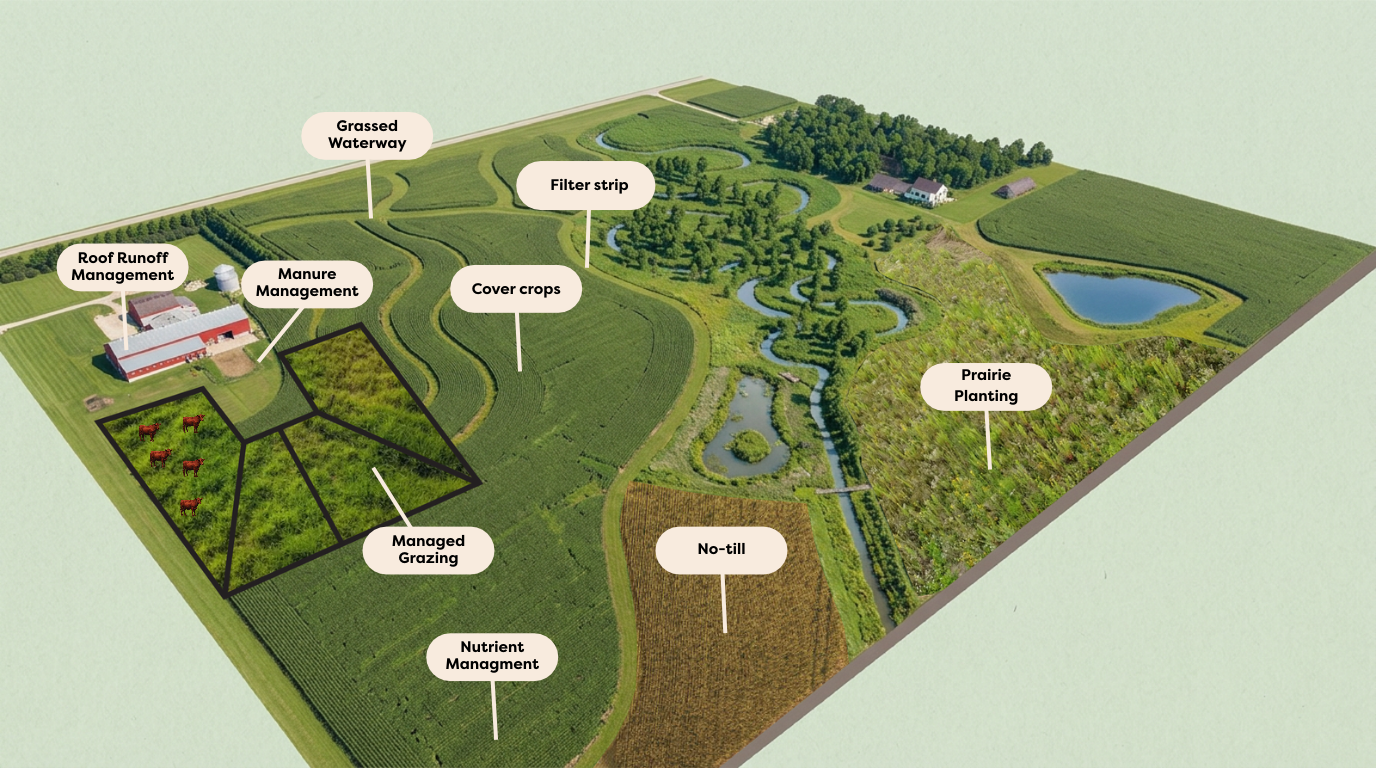
The image to the right is an example of a conservation system at at farm. Learn more about specific practices implemented using the Conservation Choices guide (USDA NRCS).
Tracking Total Acres
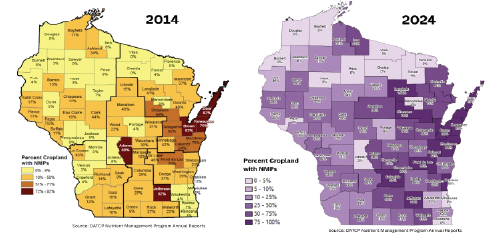
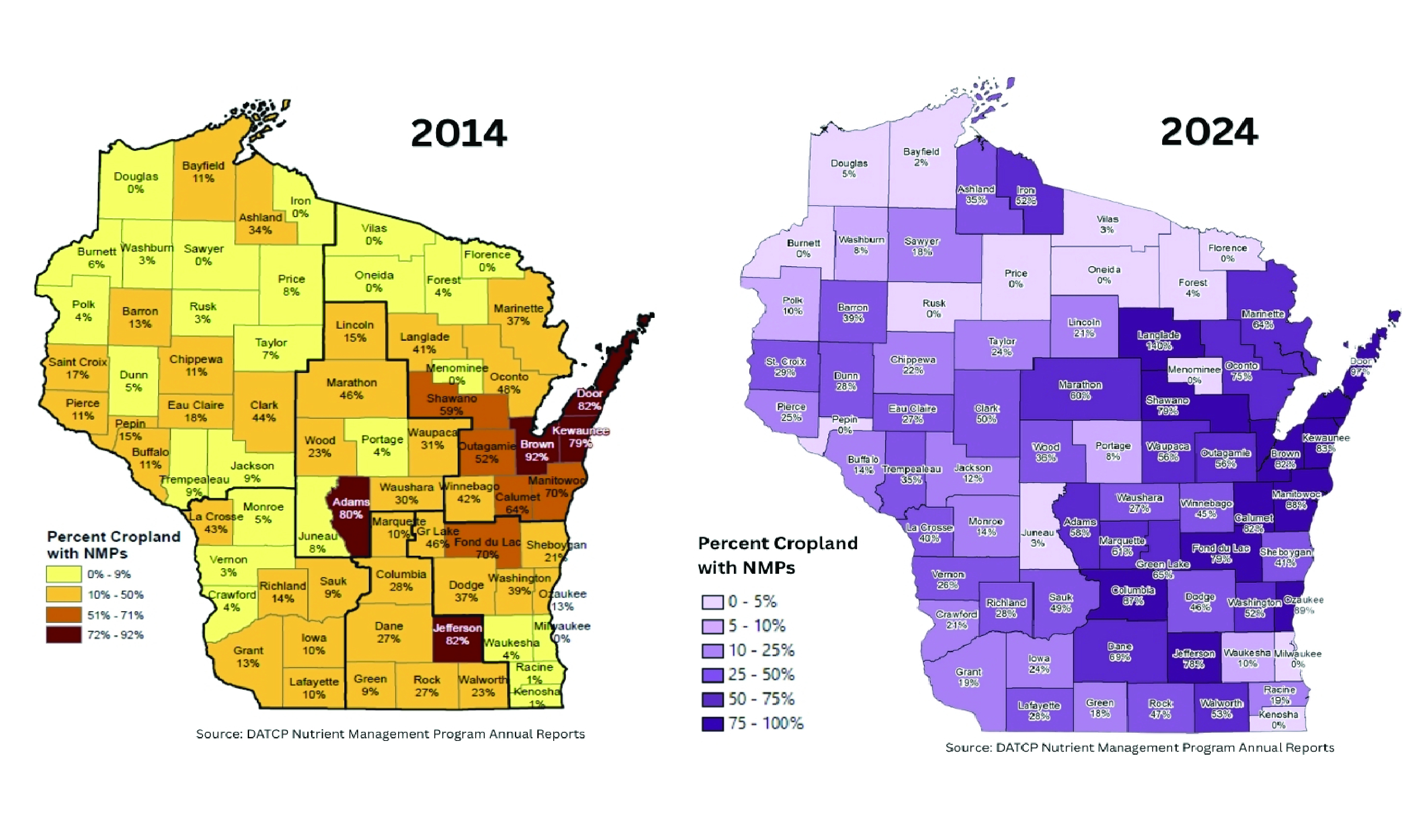
Percent of cropland with a nutrient management plan has been increasing. Data shows that from 2014 to 2024, there was a 41% increase in the amount of cropland with a nutrient management plan.
Phosphorus Index
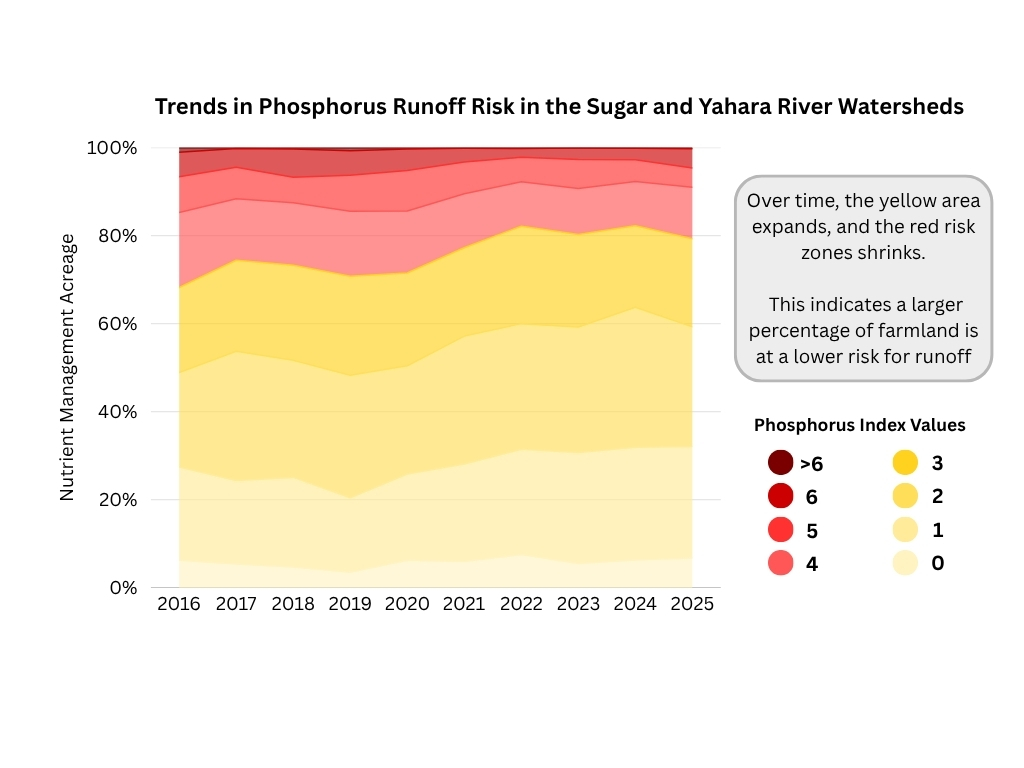
Nutrient management plans also calculate the Phosphorus Index for a given agricultural operation. The Wisconsin Phosphorus Index (P Index) (University of Wisconsin), is an assessment tool for managing phosphorus losses from cropland. It is calculated by estimating average annual runoff phosphorus delivery from the edge of each field to the nearest surface water given a field’s soil condition, crops, tillage, manure and fertilizer applications, and conservation practices implemented. The P Index provides a way to evaluate an agricultural operation’s conservation system. A higher P Index would indicate a greater likelihood of phosphorus runoff occurring, and a lower P Index indicates that a conservation system is in place that reduces risk of phosphorus runoff.
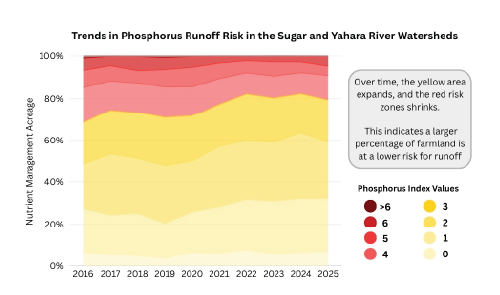
Between 2016 and 2025, nutrient management plan data in the Sugar and Yahara River show a decrease in the percentage of cropland acres with high P Index values. This is indicating that over this nearly 10-year period, agriculture operators have implemented nutrient management strategies along with conservation practices to reduce the risk of phosphorus runoff.
It is important to remember that a lower P Index represents a lower risk for runoff—it does not guarantee that phosphorus runoff is eliminated. Managing this remaining risk requires a comprehensive approach. Discover additional strategies and learn more about the department's water-quality initiatives and programs.
Learn more about how to develop and implement a Nutrient Management Plan.