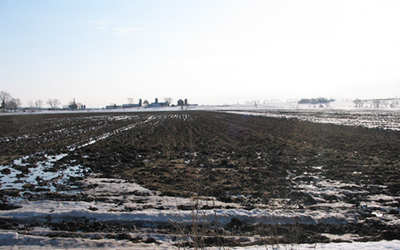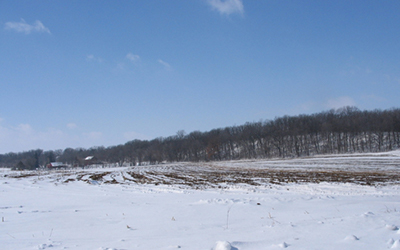
Manure spread on frozen or snow-covered does not infiltrate into the soil and may run off fields into adjoining properties or waterways. To reduce these impacts, a Winter Spreading Plan is required when spreading solid or liquid manure during frozen or snow-covered conditions, per Dane County Ordinance Chapter 49 (PDF).
The goal of the plan is to ensure that manure spread in the winter is applied at the right time, place, and rate in order to reduce the risk of it running off the field.
A Winter Spreading Plan is required when spreading solid or liquid manure on frozen or snow-covered ground.
Land Conservation staff review Winter Spreading Plans. Annual updates for Winter Spreading Plans are due April 15th.
Winter Spreading Plan
A Winter Spreading Plan includes information on manure application rates and timing, practices that will be implemented to minimize the risk of manure runoff, and maps showing spreading restriction areas. The plan must include the following information:
Emergency Response Plan
An emergency response plan is a document that identifies who should be contacted and what actions should be taken in the event of a spill or runoff event. The plan should include a list of farm contacts, contact information for area contractors who can assist with clean-up efforts, emergency management contacts, spill or runoff reporting entities, and procedures for how to respond to various types of spills or runoff events. The plan should be kept in an easily accessible location and be reviewed and updated regularly to reflect changes in contacts or procedures on the farm.
Winter Spreading Log
Spreading logs are used to document the location, amount, type, runoff mitigation practices (if required) and date of when manure is applied during frozen or snow-covered conditions. This information is important to document in the event of a spill or runoff event to show manure was applied in accordance with the winter spreading plan. The information can also be used to help track nutrients associated with the applications for nutrient management planning.
For any questions regarding nutrient management plans, please feel free to reach out to Dane County staff. To find the staff contact in your area, view the Staff Contact Map. If you can’t tell who your staff contact should be, please email Land Conservation Division landcon@danecounty.gov or call the office (608) 224-3730.